
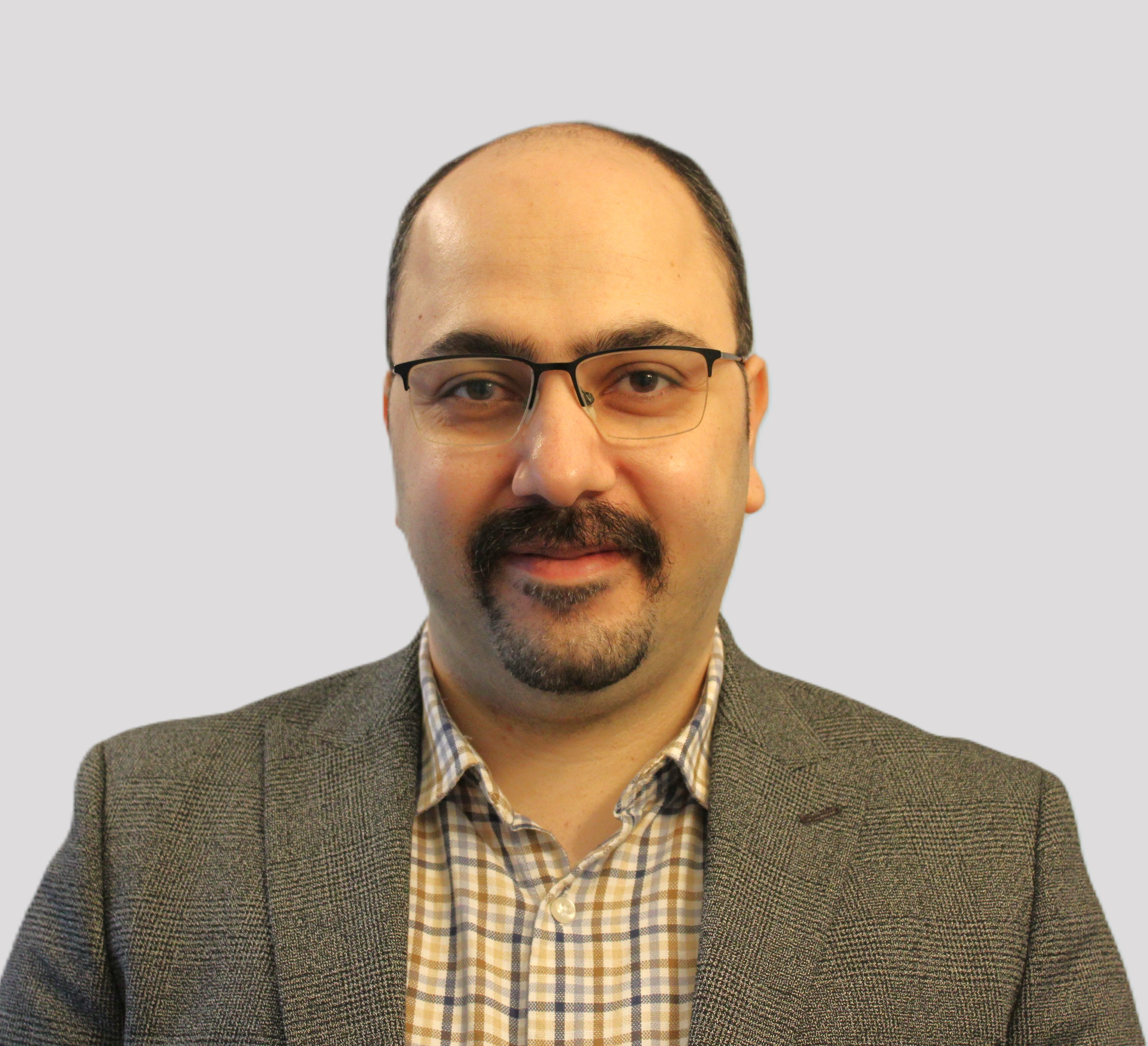
Alireza Gholipour, Ph.D.
|
Investigator, Instructor (M) Ortho Research Sports MGPO, Mass General Research Institute |
|
Instructor in Orthopedic Surgery Harvard Medical School |
Research Interests
Research Narrative
I lead the biomechanics division at the state-of-the-art ENABLE Lab at Massachusetts General Hospital, where we push the boundaries of orthopedic research to advance sports treatment through innovative bioskills, biomechanics, and cell biology research. Under the pioneering guidance of Dr. Mazzocca, our lab is uniquely positioned at the forefront of sports medicine. Here, we not only conduct cutting-edge biomechanical experiments to test and develop new procedures that improve patient outcomes, but we also focus on regenerative treatment options and the training of tomorrow’s leading specialists.
In my role, I have focused my research on addressing the significant challenges of patient-specific variability and biomechanical uncertainty in orthopedic surgery and sports medicine based on in-vitro biomechanical testing. I have developed a framework that integrates cadaveric-informed finite element analysis (FEA) with patient-specific CT and MRI imaging, which allows me to create highly accurate biomechanical simulations. This approach moves beyond traditional, generalized models and enables precise prediction of mechanical behavior under various physiological and pathological conditions. Through computational modeling and experimental validation, I am able to tailor surgical planning and rehabilitation strategies to the unique needs of each patient.
I am also recepient of the Brian D. Novis Research Award (junior grants) by the International Myeloma Foundation for the groundbreaking project titled "Advancing Spinal Stability in Multiple Myeloma: A Predictive Biomechanical Simulation Approach" (see here). In collaboration with Dr. Daniel Tobert, the research focuses on investigating the impact of bone lesions on spine stability in multiple myeloma patients, offering new insights into potential treatments. Utilizing advanced biomechanical simulations to improve patient outcomes. The project is generously supported by the annual Miracles for Myeloma 5k Run/Walk, organized by Ron and Sheree Pask of Clark, New Jersey.